


Wireless Monitoring & Automation Systems
Recommended Brand:

Ethernet Remote Monitoring
-
Teracom Ethernet remote monitoring devices are designed for stand-alone operation or integration into SCADA and automation systems. The products include a built-in web-based graphical interface (GUI) and support M2M communication protocols, enabling reliable remote monitoring and easy system integration.
-
TCW2xx devices support a wide range of M2M protocols, including MODBUS TCP/IP, MQTT, SNMP v2, HTTP API with XML/JSON status files, and HTTP POST for client-server communication, allowing fast setup and convenient remote management.
-
Teracom products are built for stable operation and long-term reliability in industrial and technical environments. All devices are manufactured to high quality standards and are supplied with a 3-Year Manufacturer Warranty.
Product Series: TCW1xx - controllers for basic monitoring and automation applications; TCW2xx - advanced devices with 32-bit architecture, extended M2M protocol support, and enhanced security including TLS-protected communication.

Cellular Remote Monitoring
-
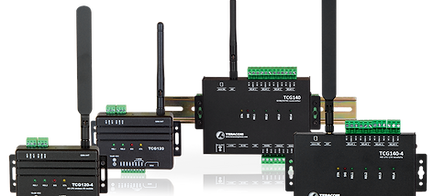
Cellular remote monitoring controllers operate over mobile networks using GPRS, 3G, and 4G LTE wireless communication technologies. They provide a reliable and flexible solution for monitoring equipment and remote locations where Ethernet connectivity is unavailable or impractical.
-
Teracom cellular controllers support Machine-to-Machine (M2M) communication, enabling smooth integration with other systems through HTTP POST with XML/JSON status files, HTTP API commands, and MQTT, allowing fast configuration and convenient remote management.
-
The devices are designed for dependable long-term operation and are suitable for industrial, infrastructure, and facility monitoring applications.
Featured: 4G LTE Universal I/O controller for remote monitoring and control of equipment and systems over cellular networks.
Sensors & Detectors
-
Sensors and detectors are used in remote monitoring and automation systems to convert environmental and electrical parameters into signals that can be processed by Ethernet or cellular controllers for real-time monitoring, alarms, and system control. These parameters include temperature, humidity, pressure, CO₂ levels, and other relevant measurements.
-
The devices support commonly used monitoring interfaces and enable flexible integration with controllers for applications such as environmental monitoring, equipment supervision, and technical alarm systems.
-
Communication Interfaces: 1-Wire sensors for compact monitoring installations and RS-485 sensors for long-distance and industrial communication environments.
-
Detector Types: Smoke detection, door status monitoring, water leakage detection, voltage presence monitoring, and other alarm or event detection applications.

Software, Apps & Tools
-
Software solutions enable data acquisition, visualization, and control of monitoring systems by collecting information from connected devices and presenting it in an accessible and organized form for operators and system administrators.
-
SCADA (Supervisory Control and Data Acquisition) software integrates monitoring data, system events, and operator commands, providing centralized supervision and control for industrial, technical, and infrastructure installations.
-
The hardware platform supports multiple M2M communication protocols and allows integration with various third-party software platforms for flexible system architecture.
-
Applications & Tools: Mobile apps and utility software for monitoring, configuration, and remote control of individual devices and small monitoring installations.

RFID Controllers
-
RFID technology provides fast and contactless identification, making it suitable for access control, equipment authorization, and identification applications in industrial and commercial environments.
-
Supported Technologies: Low-frequency 125 kHz systems with EM4102-compatible tags and high-security 13.56 MHz systems based on MIFARE DESFire technology.
-
Operating Modes: Pulse mode for door access systems, flip-flop mode for equipment switching, and terminal mode for sending tag identification data to external systems such as PCs or PLC controllers.
